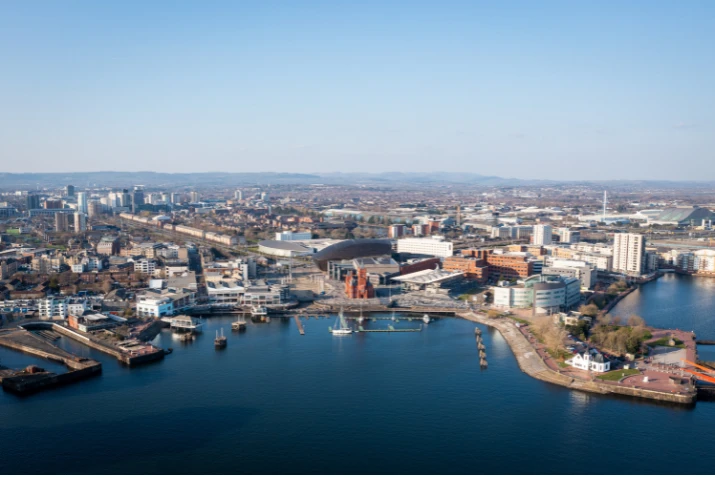
Cardiff is one of the UK’s most appealing capital cities, combining strong employment, excellent universities, good rail links, established neighbourhoods and a property market with a wide choice of homes and locations.
It is a city that works well for students, young professionals, families, commuters and investors, with access to both city-centre amenities and popular residential areas such as Pontcanna, Roath, and Cyncoed.
Cardiff offers the best of both worlds, with countryside, coast and upland walks all within easy reach. Here are some facts and figures that show why we think living in and around Cardiff is such a fantastic place to live.
1. A fast-growing, younger capital city
Cardiff is a growing capital city with a noticeably younger population profile than Wales overall. In 2024, Cardiff’s population reached 383,919, having grown by 7.5% between 2019 and 2024, compared with 3.2% across Wales.
Cardiff is also a younger-than-average city, with the typical resident aged 34, compared with 42 across Wales. Around 68% of residents were of working age, compared with 61% across Wales.
This matters because a younger, growing population helps support the city’s housing market, local businesses, nightlife, leisure economy and employment base. It also gives Cardiff a lively, energetic feel, with a wide range of people living there, from students and graduates to professionals and families.
If you are looking for a city that is busy, diverse and full of opportunity, Cardiff is definitely worth considering.
2. A strong jobs market and highly qualified workforce
Cardiff has a strong local economy and a highly skilled workforce. Higher qualification levels often support professional, managerial and technical roles, stronger local spending power and greater demand for good-quality housing and amenities.
This helps Cardiff attract a wide range of employers, from high-tech businesses and corporate offices to creative agencies, all of which support job growth and long-term property demand.
For buyers, renters and investors, Cardiff’s employment market is one of the city’s clearest strengths compared with many other parts of Wales and the UK.
The city supported 251,000 jobs in 2024, with a jobs density of 0.96, compared with 0.76 for Wales and 0.85 for Great Britain. Its employment rate was 75.6% in 2025, slightly above Wales at 72.5% and broadly in line with Great Britain at 75.5%.
Its workforce is also highly qualified. 60.6% of working-age residents held RQF4+ qualifications, compared with 44.8% in Wales and 48.6% in Great Britain. Cardiff also had a high share of people working in managerial, professional and associate professional roles, at 64.6%, compared with 48.7% for Wales and 53.6% for Great Britain.

3. A major university city with a large student base
Cardiff is also a major university city, which is a big part of its economy, culture and rental market. Cardiff University and Cardiff Metropolitan University had a combined enrolment of 43,770 students in 2024/25, including 7,080 international students.
Cardiff University accounted for 31,505 students, while Cardiff Metropolitan University accounted for 12,265 students.
Nomis also recorded 28,700 economically inactive students among Cardiff residents aged 16–64 in 2025, representing 54.1% of economically inactive residents aged 16–64.
This student base helps support Cardiff’s rental market, hospitality, retail, entertainment and cultural life. It also brings graduates into the local workforce, helping employers recruit from a strong talent pool.
For landlords and investors, the city’s student population is an important source of rental demand, while for residents it helps create a lively, cosmopolitan atmosphere.
4. Quick rail access to Bristol and London
Cardiff is well placed for people who need access to other major cities, especially Bristol and London. The fastest checked rail journeys connect Cardiff Central to Bristol Temple Meads in under an hour, while journeys between Cardiff Central and London Paddington take around two to two and half hours, although it is always worth checking times if you are planning a specific journey or commute.
This makes Cardiff a strong option for people who want the lifestyle and relative affordability of the Welsh capital while keeping access to larger employment, business and cultural centres.
For commuters, hybrid workers and businesses, Cardiff offers a practical city base with regional and national rail connections.

5. Great amenities, lifestyle and popular neighbourhoods
Cardiff offers the benefits of capital city living, with established residential neighbourhoods.
Pontcanna has a central, village-like feel, with attractive streets, independent shops, cafés, restaurants and easy access to green space. It also sits close to Pontcanna Fields, Bute Park and the city centre, making it especially attractive for people who want city access without losing a strong local community feel.
Cyncoed is widely regarded as one of Cardiff’s most desirable residential areas, known for its leafy streets, spacious homes and excellent schools. Located to the north-east of the city centre, it offers a quieter, suburban lifestyle while remaining well connected to the heart of Cardiff. The area is popular with families and professionals thanks to its green surroundings, strong community atmosphere and proximity to parks such as Roath Park and Heath Park.
Roath is one of Cardiff’s most vibrant and diverse neighbourhoods, offering a lively mix of independent businesses, cafés, restaurants and cultural attractions. Popular with young professionals, families and students alike, the area has a strong community feel and plenty of character. Roath is perhaps best known for the beautiful Roath Park, with its lake, gardens and walking routes, while nearby Wellfield Road and Albany Road provide a wealth of local shops and eateries. Its close proximity to the city centre makes it an attractive choice for those looking to enjoy an urban lifestyle while remaining part of a well-established local community.
Cardiff can have higher living costs compared to other areas in Wales, and it can be quite competitive to secure school places in sought-after areas. But if you can afford it and are looking for a balance of city life, green space, culture and neighbourhood character, it is well worth taking a look at these Cardiff neighbourhoods.
James Thomas, Lettings Manager at Moginie James Cyncoed and Roath, says, “The great thing about Cardiff is that it appeals to people at almost every stage of life, from students arriving at university and graduates staying in the city, through to professionals and families putting down roots here. Nearly one in four Cardiff households are in the private rented sector, and that broad contract-holder base continues to make the city an attractive and dynamic market for landlords.”
6. Housing choice and a broad rental market
Cardiff offers a wide range of housing, from city flats to larger family homes. In April 2026, Cardiff’s average house price was £271,000, compared with £212,000 across Wales and £270,000 across the UK.
Average prices by property type were:
- Detached homes: £522,000
- Semi-detached homes: £323,000
- Terraced homes: £260,000
- Flats and maisonettes: £160,000
- First-time buyer average price: £233,000
- Home-mover average price: £332,000
Cardiff also has a sizeable private rented sector. Private renting accounted for 24.3% of households in 2021, compared with 17.0% across Wales.
Average private rent was £1,157 per month in May 2026, compared with £836 in Wales and £1,383 across the UK.
Average rents by bedroom count were:
- 1-bed: £894
- 2-bed: £1,068
- 3-bed: £1,187
- 4+ bed: £1,677
Cardiff’s local plan identifies a requirement for 24,000 homes by 2036, equal to 1,600 homes per year. This is a planning requirement, not a guarantee of delivery, but it does show the level of expected housing need in the city.
For buyers, Cardiff offers housing close to the UK average but above the Wales average. For renters and investors, the city’s broad contract-holder base — including students, professionals, families and sharers — helps support ongoing rental demand.
Summary of living in Cardiff
Cardiff is a growing, youthful and well-connected capital city with a strong jobs market, major universities, popular neighbourhoods and a broad housing offer. It is not the cheapest place in Wales to buy or rent, but its employment base, student population, cultural appeal and continued housing need help explain why it remains such an attractive place to live and invest.
Looking to live or invest in Cardiff? Get in touch with our property experts.
Moginie James Cyncoed / Moginie James Pontcanna / Moginie James Roath
Sources: ONS local indicators, Nomis / ONS Labour Market Profile, Cardiff University, Cardiff Metropolitan University, ONS housing prices and rents; ONS Census 2021; Cardiff Council housing evidence.