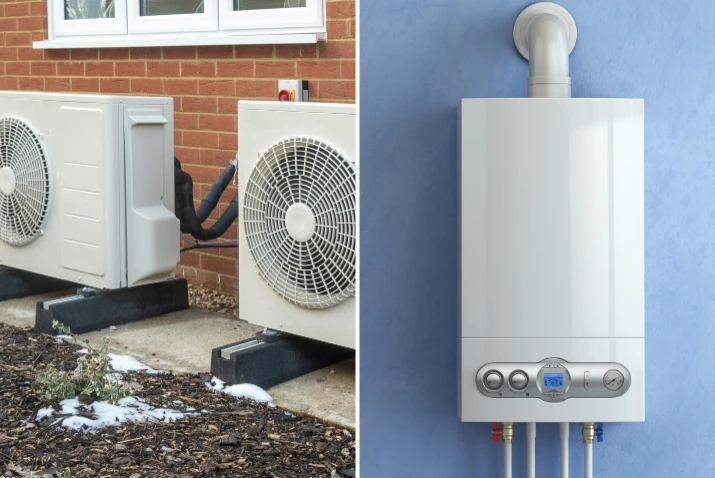
As 2026 progresses, the deadline for the government's Warm Homes Plan is coming into sharp focus for the UK's Private Rented Sector. With all rental properties in England and Wales required to reach an EPC Band C by October 2030, landlords are at a critical crossroads regarding one of the most essential systems: heating.
The choice between a high-efficiency gas boiler and a low-carbon heat pump was once about the immediate cost, but that’s changed in light of the proposed legislative changes. This post weighs the mix of grants, regulations, and long-term ROI to help buy-to-let owners decide which path secures their portfolio's future.
Why the 2030 mandate is more than just a deadline
The Warm Homes Plan will change how rental properties are assessed and regulated. Under the updated standards, EPC Band C will become mandatory for all tenancies by October 2030. This is a tightening of existing rules, certainly, but it’s also a change in the assessment methodology itself.
The government is expected to give its final response in early 2026 regarding the implementation of new EPCs. This new system will evaluate properties across three distinct metrics:
- Fabric Performance: Measuring insulation and air tightness
- Heating System Efficiency: Rewarding low-carbon technologies
- Smart Readiness: Assessing a property’s potential to integrate with modern energy management systems
However, landlords should take note of the £10,000 investment cap, which limits the amount they can spend on improvements per property. This cap applies to the cumulative cost of all energy efficiency measures needed to reach Band C, providing a safety valve for owners of particularly challenging properties.

The case for the gas boiler
Many landlords, especially those managing older housing stock, consider the gas boiler to be the most pragmatic choice. It’s important to note there are suggestions that in 2026, any newly installed boiler will need to be ‘hydrogen-ready’, meaning that eventually they will be functional on hydrogen instead of natural gas, although the final legislation on this matter is yet to be rolled out. Longer term, the sale of new gas boilers is expected to be phased out entirely by 2035.
There are also fabric limitations. Properties with solid walls, poor insulation, or significant thermal bridging issues may struggle to operate heat pumps efficiently. In these cases, the £10,000 cap is often better allocated to fabric improvements, like cavity wall insulation, loft upgrades, or double glazing, paired with a modern condensing boiler. For properties requiring extensive envelope work before a heat pump becomes viable, a boiler replacement can serve as a sensible interim solution.
If the property already has a functional boiler in place, maintenance is where your energy should be put first. Village Heating, a team of experienced boiler engineers, explains that, “all boilers, regardless of fuel type should be serviced at least once per year. It is rare that a boiler will require a service more than once a year. Typical examples would be an old boiler, a boiler that is used heavily or a boiler brand/model that is known to have issues with certain internal parts.”
A professional boiler service and repair, when necessary, remains the most cost-effective way to ensure compliance and contract holder safety in the short term, preventing costly emergency callouts and maintaining the property's rental income stream.
The case for the heat pump
If you have suitable properties and longer investment plans, a heat pump is the definitive future-proof solution. The Boiler Upgrade Scheme (BUS) currently provides £7,500 towards air-source heat pump installations, which reduces the upfront cost barrier considerably. This grant, combined with the latest in heat pump technology, can deliver a substantial EPC band improvement that might prove impossible to achieve through a standard boiler alone.
Alongside compliance, heat pumps offer several operational benefits. Decarbonising your portfolio ahead of the anticipated phase-out of new gas boiler sales positions you as a forward-thinking landlord and could influence your ability to command premium rents from environmentally conscious contract holders.
What’s more, properties with heat pumps also demonstrate lower running costs when they’re correctly designed and matched to the building's heat requirements.
A financial comparison - boiler vs heat pump
The numbers tell a revealing story that could influence your decision, because budgets matter. A complete heat pump installation typically costs between £12,000 and £15,000 before the BUS grant is applied, bringing the net cost down to £4,500 to £7,500. This is suddenly much closer to the £2,500 to £4,000 required for an A-rated gas boiler.
When running costs are factored in, the gap narrows even further. With 2026 energy tariffs increasingly favouring electricity over gas, particularly on Economy 7 or smart tariffs, heat pumps now offer comparable annual running costs to gas heating systems when correctly designed and installed in well-insulated properties.
The decision ultimately hinges on your property's characteristics and your overall investment strategy. Heat pumps are the clear winner in terms of efficiency and futureproofing, but only for properties with modern insulation standards, sufficient space for a hot water cylinder, and landlords seeking maximum EPC uplift to reach Band C or above. They're particularly suited to larger properties where the scale justifies the investment and where fabric efficiency is already reasonable.
On the other hand, boilers are the sensible choice for lower-value properties where the 10% property value exemption might apply, or in high heat-loss buildings that require extensive and costly fabric improvements before a heat pump becomes feasible. In these cases, allocating your £10,000 cap to insulation measures alongside a modest boiler upgrade makes financial sense.
The wait and see approach carries significant risk. The demand for both heat pump installers and fabric improvement contractors will almost certainly surge, inevitably driving up labour costs and extending lead times. This is why early movers will benefit from competitive pricing, installer availability, and the breathing room to address any teething problems before compliance deadlines bite.
If you're looking to let or sell your property, we can help. Get in touch with your local branch or book in for a property valuation to find out how much your property is worth.
This guest blog was written by Annie Button.