Planning permission is the approval you need to gain from your local authority if you want to make changes to your home that are considered ‘development’. This includes:
• Extending or converting part of the property (unless the project falls within permitted development rights – see below).
• Making a dormer loft conversion on a front-facing roof.
• Making alterations if your property is listed or in a conservation area.
• Dividing the property into two or more separate homes.
• Demolishing and rebuilding the property.
• Changing the use of the property, e.g. if you wanted to turn part of your home into business premises or let it out as a House in Multiple Occupation (HMO).
It is essential to gain approval before starting any work. If your project needs planning permission and you go ahead without it, the council can serve you with an enforcement notice ordering you to undo all the changes!
Permitted development
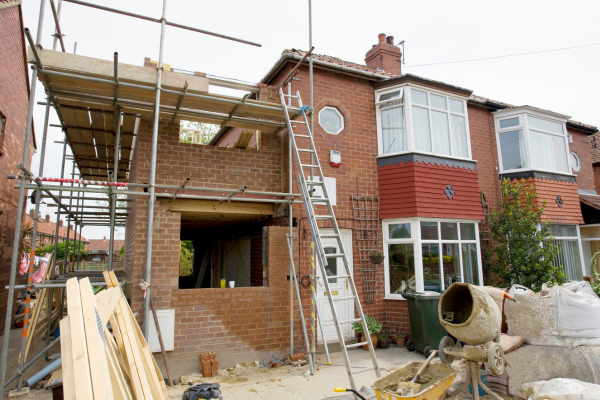
The good news is that there is a volume allowance for extensions and conversions, known as ‘permitted development rights’ (PDR). That means you can add a certain amount of living space to your home without having to make a planning application. In England and Wales this is:
• For detached and semi-detached houses, up to 50 cubic meters.
• For terraced houses, up to 40 cubic meters.
For example, if you want to convert fairly a standard loft space into a bedroom, add a conservatory, or turn an attached garage into a living room, you may be able to do that under permitted development.
Note that PDR only applies to houses, and you will always need to seek planning permission if your home is:
• A flat or maisonette
• A listed building
• In a conservation area
It’s also essential to know is that any extensions or alterations made to the original property in the past count towards the volume allowance – whether it was you or a previous owner that made the changes. That means if your home has already been extended once, even a small addition could now require planning permission.
What’s the process for gaining planning permission?
This interactive house tool on the government’s Planning Portal provides a really useful guide as to which works are likely to need planning permission, and it’s a great place to start.
However, while there are national regulations, each local council can set its own planning rules. So, if you are thinking of making changes to your home, the next step is to contact your local authority planning department to find out their specific policies.
You will need to supply detailed site plans and specific supporting documentation, so it’s well worth working with specialists who can help give your application the best chance of success. Of course, there’s a cost to this, but if your application is incorrect or incomplete, it could delay your project or even lead to permission being refused. You can search for architects, planning consultants and other building professionals on the Planning Portal.
Most planning applications can be submitted online via the government portal. Once you have paid the fee (around £260), it is then passed on to the relevant local authority for consideration, and the is likely to take around eight weeks.
Even if your changes fall under permitted development rights, you should always get confirmation by applying to your local planning authority for a certificate of lawful development, which will cost around £100.
Finally, any building works undertaken - including loft conversions, adding a bathroom and replacing windows or doors - might need building regulations approval from the council. This should be confirmed before any work begins.
If you are thinking of making changes to your home and would like an idea of how much value the work might add, come and speak to the experts in your local branch. We’re always here to help.